🔍 What’s the Big Shift in 2025?
The landscape of logistics and delivery is undergoing a transformation in 2025. What was once experimental — robots working inside warehouses or limited pilot delivery bots — is now scaling up globally. Robotics and automation are becoming part of the everyday backbone of supply chains and “last-mile delivery,” bringing speed, efficiency, and scalability to a sector under intense pressure from booming e-commerce and rising consumer demand. Automate+2MarketsandMarkets+2
Here’s what’s changed:
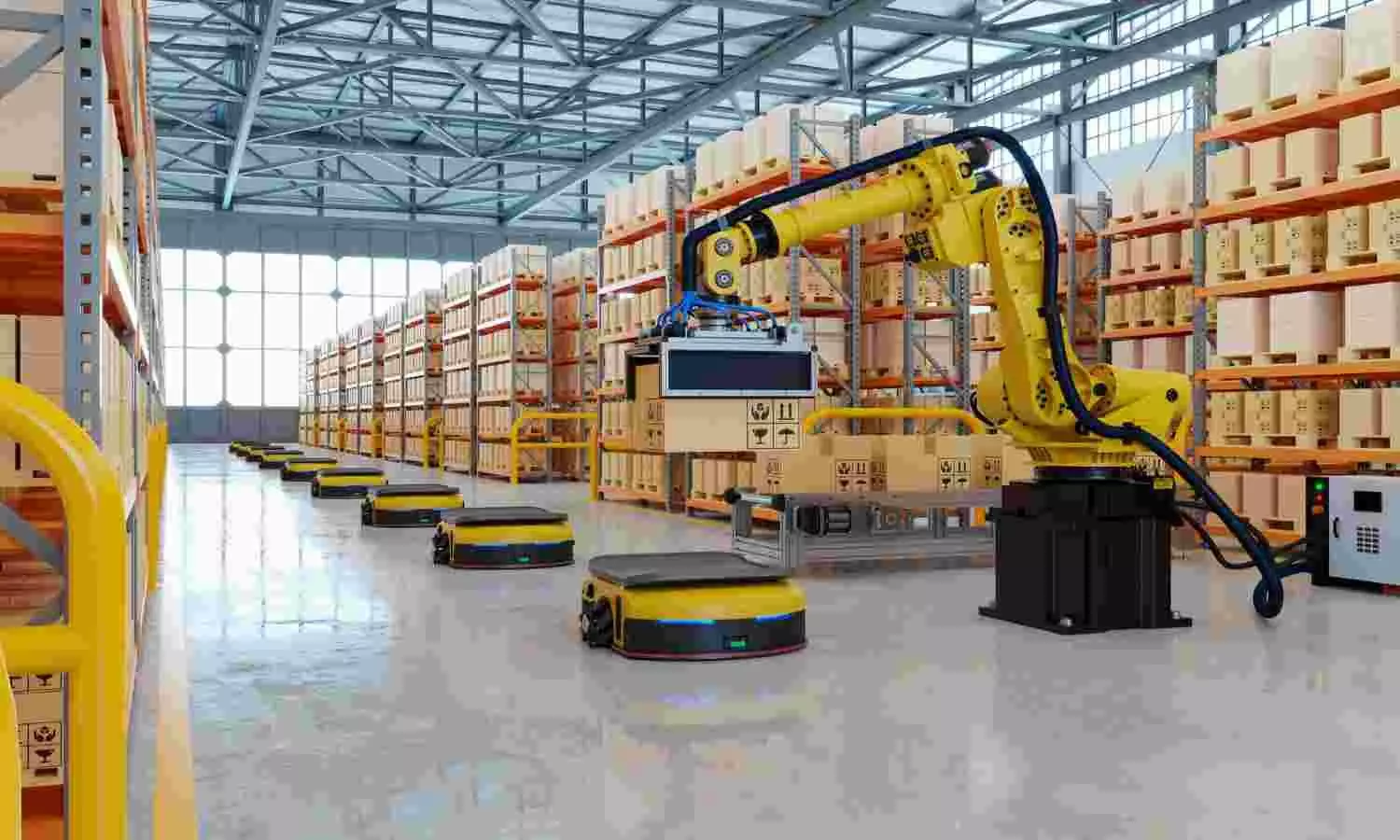
- Warehouse automation isn’t optional anymore: AI-powered warehouse robots — from autonomous mobile robots (AMRs) to robotic picking arms — are now widely deployed, handling tasks like picking, packing, storing, and retrieving items. Nomagic+2Inbound Logistics+2
- Last-mile delivery robots are gaining real uptake: Small delivery robots (sidewalk bots or small autonomous rovers) are increasingly used for delivering groceries, food, or parcels, lowering costs and speeding up delivery times. GlobeNewswire+2AI Insider+2
- The market is booming: The global delivery-robots market is expected to grow rapidly — from about USD 0.8 billion in 2025 to over USD 3 billion within a few years. MarketsandMarkets+2Business Wire+2
In short — 2025 is not a trial year; it’s the year when robotic logistics became mainstream.
🚀 What’s Driving the Rise of Robotic Logistics?
Several converging trends have accelerated this shift:
- E-commerce & demand for instant delivery: With more online shopping than ever, companies and logistics providers are under pressure to deliver fast. Robots — in warehouses and on streets — help meet that demand consistently. Exotec+2The Times of India+2
- Technological maturity: Advances in AI, computer vision, machine-learning, and autonomous navigation have made robots more reliable, flexible, and capable of handling complex environments — including warehouses and urban sidewalks. tgw-group.com+2Nomagic+2
- Cost efficiency & scalability: Compared to manually staffed warehouses or delivery fleets, robots can work 24/7, reduce errors, and decrease long-term costs, making them attractive investments for businesses large and small. Inbound Logistics+2freightamigo.com+2
- Labor shortages and shifting markets: As labor becomes more expensive or scarcer, automation helps bridge workforce gaps — and maintain supply-chain reliability. Logistics Viewpoints+2The Times of India+2
📦 Real-World Use Cases in 2025
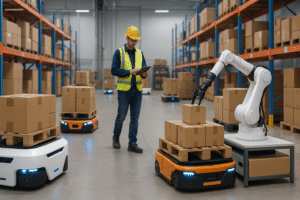
- Warehouses & Fulfillment Centers — Robots now manage storage, inventory, picking & packing, sorting, and palletizing. This reduces manual labor, improves speed, and cuts human error in high-volume environments. Inbound Logistics+2Precedence Research+2
- Last-Mile Delivery — Autonomous “micro-robots” or small delivery bots are delivering food, groceries, parcels in cities or urban neighborhoods. These often travel sidewalks/street-side routes or bike-lane-compatible paths. GlobeNewswire+2AI Insider+2
- Hybrid logistics networks — Some systems combine warehouse robots + road-side/mobile robots + human oversight to optimize efficiency: goods move via robots inside warehouses, then travel by autonomous vehicles/robots for delivery outside. Automate+2Business Wire+2
🌍 Why This Matters Globally — and for Places Like India
- Scalability for Developing Markets: As automation becomes more affordable and modular, even mid-size warehouses or logistics firms in developing regions can adopt robotics — improving efficiency without needing massive infrastructure investment.
- Boost to E-commerce & Retail Growth: Faster, reliable delivery can support growth in online markets, especially as customer expectations rise globally.
- Reduced Dependence on Manual Labor: In places where labor shortages, cost volatility, or skill gaps are common — robotics can fill key gaps, making logistics predictable and less vulnerable.
- Potential for Local Innovation: As demand and adoption grow, there’s room for local startups or smaller companies to build robotics/automation solutions tailored to regional needs (climate, road conditions, labor practices), not just copy global systems.
For a place like yours — where tech adoption, interest in innovation, and growth potential exist — this shift could open opportunities: for business, for education, for technology-driven work.
⚠️ Challenges & What’s Still to Figure Out
It’s not a perfect transition. There are real challenges and limitations:
- Infrastructure & Integration: Older warehouses or supply-chain setups may need redesign or retrofit to support automation. Robots need proper mapping, storage layout, data integration with warehouse management systems. Inbound Logistics+1
- Regulation & Public Acceptance: Delivery robots sharing sidewalks or urban spaces may need regulation around safety, pedestrian interaction, liability in case of accidents. Social acceptance also matters.
- Initial Cost & ROI Uncertainty: For small firms, upfront costs for robots and integration can still be high. ROI depends on scale, order volume, and efficient usage.
- Skill Adaptation: As robots take over repetitive tasks, human workers need retraining — to maintain, supervise, troubleshoot robots or take up higher-level roles.
- Technology Limitations: Robots may still struggle with irregular/unexpected scenarios — like unpredictable pedestrian traffic, irregular packages, complex environments, or extreme weather.
🎯 What This Means for You — Content Ideas & Opportunity
Given your interests in technology, animation, quizzes, and creating content — this trend could inspire many great outputs:
- Tech-Explainer Video / Article: “Why robots are the future of logistics — a 2025 update” — explain warehouse robots, delivery bots, and real-world trends.
- Quiz for Kids / Students: Interactive quiz — “Which of these tasks can be done by robots in 2025?” — to educate them about automation.
- Futuristic Short Animations: Using your animation skills in Blender — show a short story: “A package’s journey: warehouse → robot → doorstep.”
- Analysis Article for India / Asia: Explore how robotic logistics could evolve in Indian cities — what needs to change, what benefits could follow.
- Interview-Style / Opinion Content: Debate pros & cons — human jobs vs robots; automation & labor; impact on small businesses.
🧠 Final Thoughts — We’re Already in the Age of Robotic Logistics
2025 isn’t about experiments anymore. We’ve crossed into widespread adoption: warehouses running on robots, deliveries by autonomous bots becoming increasingly common, and supply-chains that are faster, more flexible, and more scalable than ever.
For businesses, workers, consumers — and for curious minds like yours — robotic logistics isn’t a future concept. It’s a present reality.