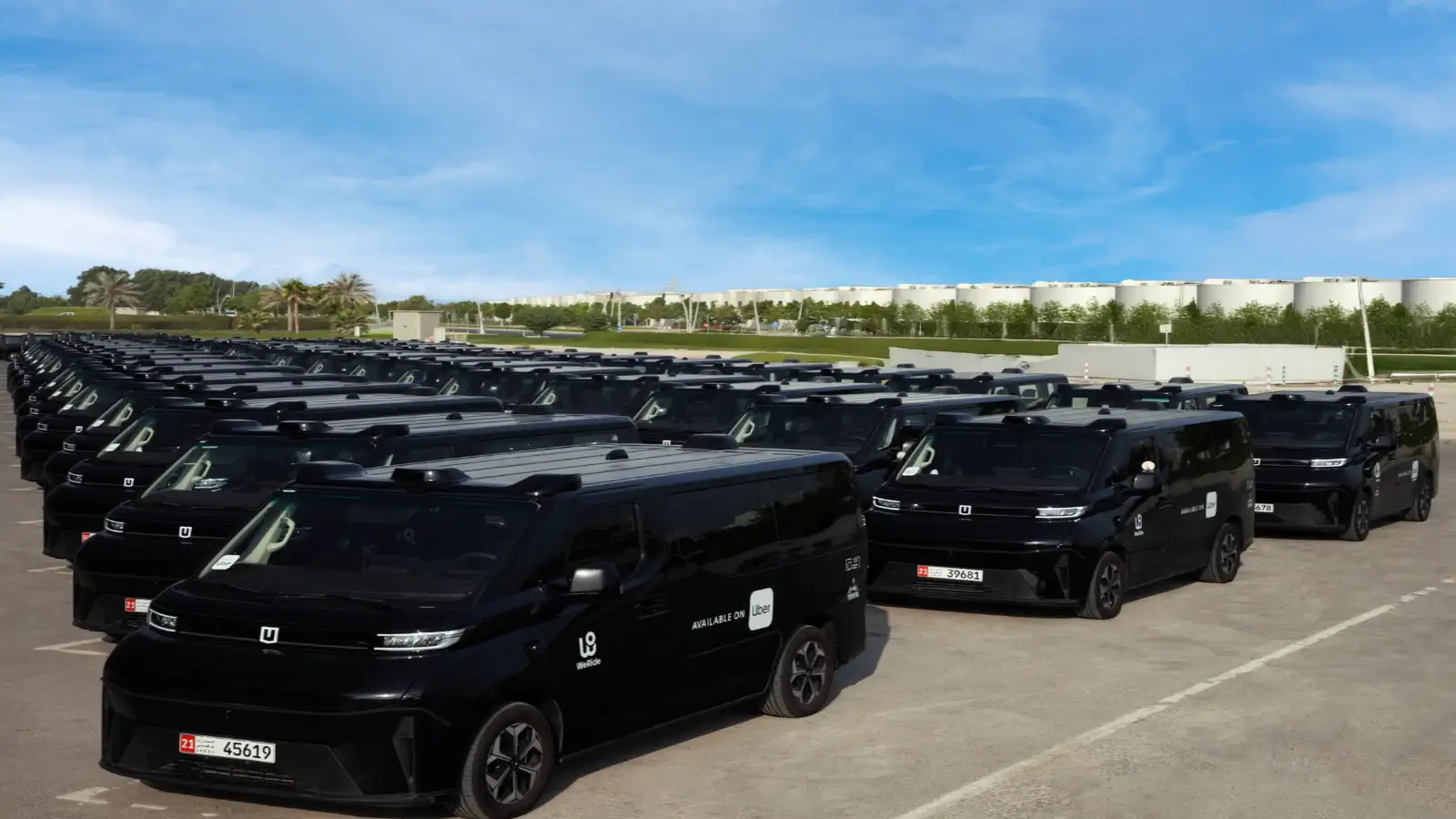
On November 26, 2025, WeRide and Uber together flipped a major milestone in global transport — they launched fully driverless, commercial robotaxi services in Abu Dhabi (UAE), marking the first time such a service is available outside the United States on Uber’s platform. Reuters+2Gasgoo+2
Riders on Abu Dhabi’s Yas Island can now request a robotaxi via UberX, Uber Comfort — or a newly added “Autonomous” ride-category, the first of its kind globally. Gasgoo+2Uber+2
No safety driver. No human behind the wheel. Just sensors, cameras, and software — delivering passengers from A to B in a “driver-out” vehicle. That’s real 2025. Reuters+2Global Times+2
What Makes It a Historic Launch
- First-of-its-kind permit: WeRide secured the world’s first city-level permit for fully driverless robotaxi operations outside the U.S. — a regulatory first globally. Nasdaq+2ir.weride.ai+2
- Scale & readiness: The service begins with the WeRide “GXR” fleet running on public roads — not as trials, but as paid, fare-charging rides. Vehicles operate without a human occupant onboard. Gasgoo+2Nasdaq+2
- Integration into ride-hailing ecosystem: Instead of a standalone app, these robotaxis are integrated seamlessly into Uber’s existing ride-hailing platform — making it as easy for riders as clicking “book ride.” The Economic Times+2Uber+2
In short — this isn’t a pilot test or a gimmick. It’s the beginning of what could become everyday urban mobility.
What’s Behind the Push (Why Now?)
A few factors helped bring this vision to reality:
- Regulatory readiness: Local authorities in Abu Dhabi — namely the Integrated Transport Centre (ITC) — granted the first fully driverless commercial license, reflecting growing governmental support for autonomous mobility. Gasgoo+2Uber+2
- Mature technology & confidence: WeRide — which has operated in several cities globally — has built enough experience, road-testing, and tech maturity to deploy this at scale. Wikipedia+1
- Demand for smarter, greener mobility: As urban populations grow and traffic pressure intensifies, autonomous ride-hailing promises efficient, on-demand transport without the inefficiencies of human-driven cabs.
What the Experience Looks Like for Passengers
- When you open Uber’s app in Yas Island, you may now see a ride option “Autonomous.” You pick that, and if a WeRide robotaxi is available, it comes to pick you — no driver, no person behind the wheel. Gasgoo+2The Verge+2
- The vehicles are equipped with a sophisticated array of sensors and cameras (commonly used in Level-4 autonomous driving) that monitor the road, other vehicles/pedestrians, and ensure safety during the ride. The Verge+2Global Times+2
- Behind the scenes, Uber + a local fleet operator manage charging, cleaning, maintenance — so from user perspective it feels similar to a regular taxi, just driverless. The Verge+1
Why This Matters — Globally & for the Future
- Proof of concept at scale: This isn’t a limited trial. It’s an operational, fare-charging service. If robotaxis can operate safely at scale in Abu Dhabi, it shows viability in real cities — not just test environments.
- Regulatory precedent: With a city-level permit for driverless taxis outside the U.S., this could pave the path for other cities and countries to follow — accelerating global adoption of autonomous mobility.
- The shift in ride-hailing business model: Platforms like Uber — which historically depended on human drivers — are now transforming into mobility-as-a-service providers where vehicles themselves are “workers.” This could radically change economics, costs, and accessibility of urban transport.
- Potential impact on environment and urban planning: Autonomous taxis — if widely adopted — could lead to fewer personal vehicles, better traffic management, and efficient use of shared mobility — possibly reducing emissions and urban congestion.
What We Should Watch Out For / What’s Still Unclear
- Coverage & reach: Right now, the service is limited to certain zones (e.g. Yas Island) in Abu Dhabi. It’s not yet clear when — or if — it’ll scale to entire cities or to less structured urban environments.
- Public acceptance & trust: Many riders might hesitate to ride in a driverless car. User perception, safety record and trust-building will be critical.
- Regulatory & liability questions: In case of accidents, who’s responsible — the provider, manufacturer, or city? As more cities adopt, legal frameworks may get complex.
- Cost vs. convenience: It remains to be seen whether fares will be significantly cheaper than traditional taxis, or whether convenience will justify any premium.
What This Means for India (and for You in Guntur)
While the launch is in Abu Dhabi, the ripple effects are global — including potentially for India. As autonomous mobility proves itself, Indian cities might explore similar possibilities (with suitable infrastructure and regulations).
For you — given your interest in science, tech, and digital content — this is a great story to follow. You could:
- Feature this development on your YouTube tech channel — explaining robotaxi tech, its benefits, and future potential.
- Use the robotaxi story as a case study for discussions on smart cities, sustainability, urban mobility in India.
- Explore what autonomous mobility might mean for smaller cities (like near you), in terms of adoption challenges, infrastructure changes, social impact, etc.
Final Thought
The robotaxi revolution isn’t coming — it’s already here. The launch of fully driverless — no-human-onboard — ride-hailing in Abu Dhabi by WeRide and Uber represents a watershed moment for urban mobility worldwide. If this model succeeds, we might soon see a world where the idea of “calling a cab” doesn’t involve a human driver at all.
Let me know if you want a deep-dive article that explores 5–10 companies launching similar robotaxi / autonomous mobility services around the world (with maps, timelines, and growth forecasts).
The Dawn of a New Mobility Era
On November 26, 2025, WeRide and Uber together flipped a major milestone in global transport — they launched fully driverless, commercial robotaxi services in Abu Dhabi (UAE), marking the first time such a service is available outside the United States on Uber’s platform. Reuters+2Gasgoo+2
Riders on Abu Dhabi’s Yas Island can now request a robotaxi via UberX, Uber Comfort — or a newly added “Autonomous” ride-category, the first of its kind globally. Gasgoo+2Uber+2
No safety driver. No human behind the wheel. Just sensors, cameras, and software — delivering passengers from A to B in a “driver-out” vehicle. That’s real 2025. Reuters+2Global Times+2
What Makes It a Historic Launch
- First-of-its-kind permit: WeRide secured the world’s first city-level permit for fully driverless robotaxi operations outside the U.S. — a regulatory first globally. Nasdaq+2ir.weride.ai+2
- Scale & readiness: The service begins with the WeRide “GXR” fleet running on public roads — not as trials, but as paid, fare-charging rides. Vehicles operate without a human occupant onboard. Gasgoo+2Nasdaq+2
- Integration into ride-hailing ecosystem: Instead of a standalone app, these robotaxis are integrated seamlessly into Uber’s existing ride-hailing platform — making it as easy for riders as clicking “book ride.” The Economic Times+2Uber+2
In short — this isn’t a pilot test or a gimmick. It’s the beginning of what could become everyday urban mobility.
What’s Behind the Push (Why Now?)
A few factors helped bring this vision to reality:
- Regulatory readiness: Local authorities in Abu Dhabi — namely the Integrated Transport Centre (ITC) — granted the first fully driverless commercial license, reflecting growing governmental support for autonomous mobility. Gasgoo+2Uber+2
- Mature technology & confidence: WeRide — which has operated in several cities globally — has built enough experience, road-testing, and tech maturity to deploy this at scale. Wikipedia+1
- Demand for smarter, greener mobility: As urban populations grow and traffic pressure intensifies, autonomous ride-hailing promises efficient, on-demand transport without the inefficiencies of human-driven cabs.
What the Experience Looks Like for Passengers
- When you open Uber’s app in Yas Island, you may now see a ride option “Autonomous.” You pick that, and if a WeRide robotaxi is available, it comes to pick you — no driver, no person behind the wheel. Gasgoo+2The Verge+2
- The vehicles are equipped with a sophisticated array of sensors and cameras (commonly used in Level-4 autonomous driving) that monitor the road, other vehicles/pedestrians, and ensure safety during the ride. The Verge+2Global Times+2
- Behind the scenes, Uber + a local fleet operator manage charging, cleaning, maintenance — so from user perspective it feels similar to a regular taxi, just driverless. The Verge+1
Why This Matters — Globally & for the Future
- Proof of concept at scale: This isn’t a limited trial. It’s an operational, fare-charging service. If robotaxis can operate safely at scale in Abu Dhabi, it shows viability in real cities — not just test environments.
- Regulatory precedent: With a city-level permit for driverless taxis outside the U.S., this could pave the path for other cities and countries to follow — accelerating global adoption of autonomous mobility.
- The shift in ride-hailing business model: Platforms like Uber — which historically depended on human drivers — are now transforming into mobility-as-a-service providers where vehicles themselves are “workers.” This could radically change economics, costs, and accessibility of urban transport.
- Potential impact on environment and urban planning: Autonomous taxis — if widely adopted — could lead to fewer personal vehicles, better traffic management, and efficient use of shared mobility — possibly reducing emissions and urban congestion.
What We Should Watch Out For / What’s Still Unclear
- Coverage & reach: Right now, the service is limited to certain zones (e.g. Yas Island) in Abu Dhabi. It’s not yet clear when — or if — it’ll scale to entire cities or to less structured urban environments.
- Public acceptance & trust: Many riders might hesitate to ride in a driverless car. User perception, safety record and trust-building will be critical.
- Regulatory & liability questions: In case of accidents, who’s responsible — the provider, manufacturer, or city? As more cities adopt, legal frameworks may get complex.
- Cost vs. convenience: It remains to be seen whether fares will be significantly cheaper than traditional taxis, or whether convenience will justify any premium.
What This Means for India (and for You in Guntur)
While the launch is in Abu Dhabi, the ripple effects are global — including potentially for India. As autonomous mobility proves itself, Indian cities might explore similar possibilities (with suitable infrastructure and regulations).
For you — given your interest in science, tech, and digital content — this is a great story to follow. You could:
- Feature this development on your YouTube tech channel — explaining robotaxi tech, its benefits, and future potential.
- Use the robotaxi story as a case study for discussions on smart cities, sustainability, urban mobility in India.
- Explore what autonomous mobility might mean for smaller cities (like near you), in terms of adoption challenges, infrastructure changes, social impact, etc.
Final Thought
The robotaxi revolution isn’t coming — it’s already here. The launch of fully driverless — no-human-onboard — ride-hailing in Abu Dhabi by WeRide and Uber represents a watershed moment for urban mobility worldwide. If this model succeeds, we might soon see a world where the idea of “calling a cab” doesn’t involve a human driver at all.
Let me know if you want a deep-dive article that explores 5–10 companies launching similar robotaxi / autonomous mobility services around the world (with maps, timelines, and growth forecasts).