🤖 What Is “Robots as a Service” (RaaS)?
Robotics as a Service (RaaS) refers to a service model where rather than buying robots outright, companies lease or rent robots — similar in spirit to how companies use software-as-a-service (SaaS). Businesses pay recurring fees (or pay-per-use) so they get access to robotic automation (hardware + software + maintenance) without large upfront capital investment. GeeksforGeeks+2Grand View Research+2
This approach reduces the barrier to entry for automation — small and medium enterprises (SMEs) or resource-constrained businesses can adopt industrial or service robots without heavy capital expenditure. ResearchGate+1
📈 The 2025 Breakout: RaaS Is Booming — What the Data Says
- According to one report, the global RaaS market in 2025 is estimated to be worth around USD 2.4 billion. Future Market Insights+1
- Other forecasts project robust growth: some estimates suggest the market could expand to USD 8–10 billion over the next several years (2025–2032/2034) depending on adoption rates. zionmarketresearch.com+2DataM Intelligence+2
- The broader robotics market is also growing: the global robotics market (hardware + software + services) is nearing USD 50 billion in 2025, showing an ~11% increase over 2024. ABI Research+1
- Demand for professional / industrial use robots remains high: service-robot deployments for professional tasks increased significantly, with new installations in 2024 showing a 9% rise. IFR International Federation of Robotics+1
These numbers suggest 2025 is not just another growth year — it’s a turning point where RaaS shifts from niche toward mainstream adoption globally.
🎯 What’s Driving the RaaS Boom in 2025
Several key factors are fueling the rapid rise of RaaS:
• Lowering Cost Barriers & Risk for Businesses
Buying industrial robots or automation systems outright involves massive upfront costs — expensive hardware, integration, maintenance. RaaS converts that into predictable, periodic operational expenses. That makes robotics accessible even to small or mid-sized businesses. ResearchGate+1
• Flexibility & Scalability
Because businesses lease robots rather than own, they can scale usage up or down based on demand: rush periods, seasonal peaks, changing workloads. This flexibility is especially attractive for industries like logistics, warehousing, retail, and manufacturing. AI Insider+2Global Market Insights Inc.+2
• Rapid Advances in Technology (AI + Cloud + Robotics Integration)
Modern robotics — combining improvements in AI, cloud infrastructure, IoT, and sensors — makes robots more capable, reliable and easier to maintain remotely. This technical maturity lowers cost and improves ROI for RaaS providers and clients alike. Nomagic+2Grand View Research+2
• Growing Demand Across Sectors (Logistics, Manufacturing, Healthcare, Services)
From warehouses and factories to hospitals, hotels, and logistics — many sectors face labor shortages, rising costs, or need efficiency gains. Robots offered as a service meet these needs without large capital outlays, making RaaS a versatile solution. The Business Research Company+2Dimension Market Research+2
• Shift in Business Mindset: From Ownership to Access
More companies — especially smaller ones — are rethinking long-term asset ownership. RaaS aligns with a broader shift toward “as-a-service” models (like SaaS, mobility-as-a-service, etc.), preferring flexibility, lower upfront cost, and maintenance-free operation. AI Insider+2Grand View Research+2
💡 Real-World Examples & Use Cases (2025)
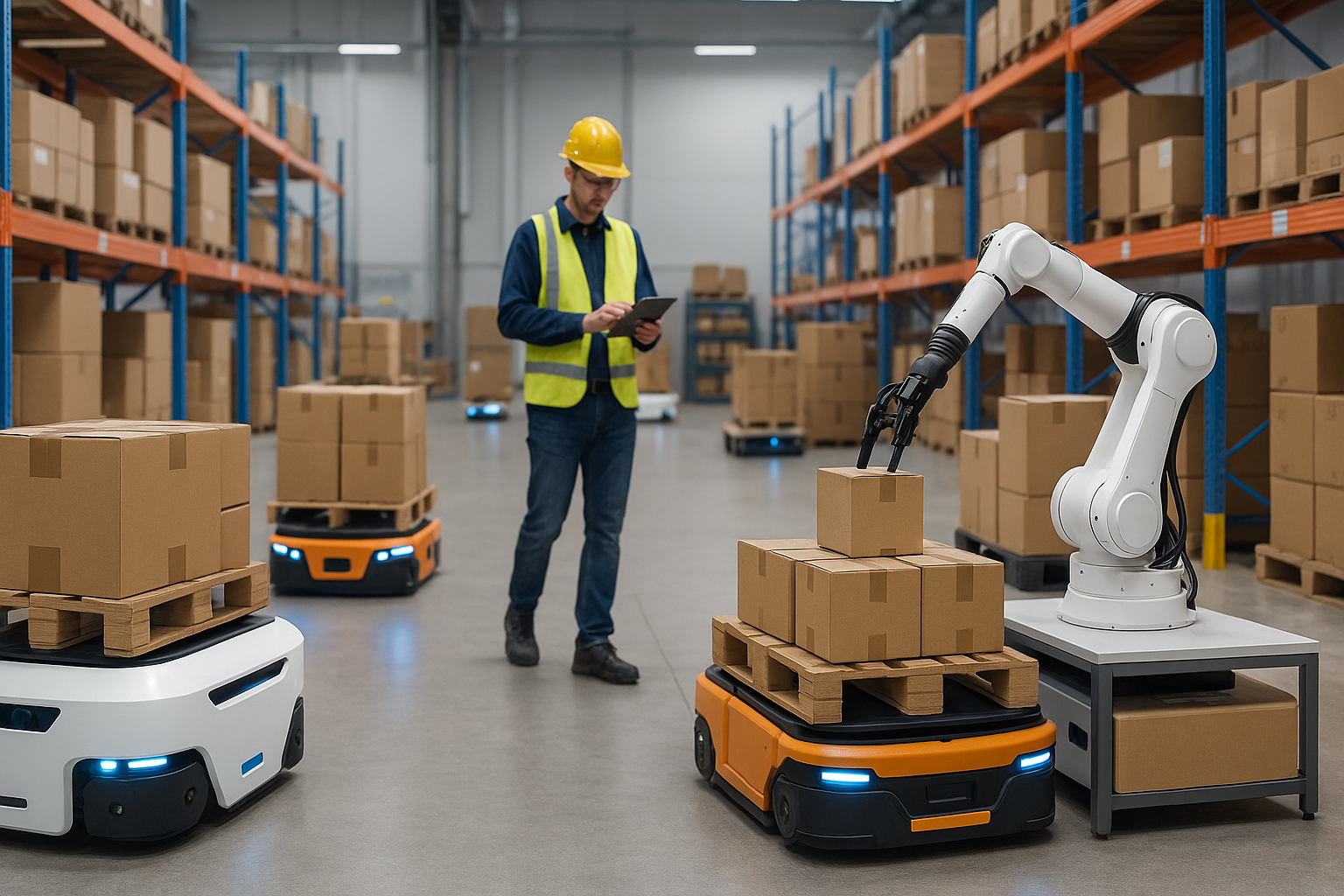
- Warehousing & Logistics: Many warehouses and fulfillment centers are replacing manual picking, sorting, packing, and transporting tasks with leased mobile robots — improving speed and reducing errors. The combination of RaaS + mobile robotics + cloud orchestration is becoming common. Grand View Research+2ABI Research+2
- Manufacturing: Factories increasingly outsource part of their production/assembly automation via RaaS — rather than buying robotic arms, they lease robots for specific production runs, boosting flexibility for small/medium manufacturers. The Business Research Company+2Grand View Research+2
- Service Sector (Cleaning, Hospitality, Retail, Facilities): Service robots for cleaning, surveillance, material delivery, shelf-stocking, and facility maintenance are increasingly leased — especially where demand fluctuates. RaaS reduces maintenance burden and ensures access to up-to-date robotics. Global Market Insights Inc.+2Nomagic+2
- Healthcare & Lab Automation: Hospitals and labs are slowly starting to consider RaaS for tasks like sanitization, sample transport, and repetitive handling tasks — RaaS lowers cost barriers and simplifies upgrades. Dimension Market Research+2Fortune Business Insights+2
🌍 Why 2025 — and Not Before — Became the RaaS Inflection Point
- Technology Reached Maturity: Robot hardware + AI + cloud orchestration + remote management became reliable enough in 2024–2025 to support full-service business models.
- Post-Pandemic Supply/Demand Shift: After pandemic-driven disruptions, companies looked to automation to improve resilience — and leasing robots via RaaS was faster and cheaper than full automation investments.
- Labor Shortage & Rising Wages: In many countries, labor costs rose and availability declined. RaaS offered a cost-effective alternative to hiring more workers.
- Financial & Business Trend Shift: Businesses increasingly prefer operational expenses (OpEx) over capital expenses (CapEx). RaaS fits this financial model.
- Global Industrial & Logistic Boom: Growth in e-commerce, global supply chains, warehouses, fulfillment — all drive demand for flexible automation now.
✅ What This Means for You — and Why It’s a Big Deal
- For businesses (even small ones) — automation is no longer a distant-heavy-capex dream. With RaaS, even these companies can access robotics and automation, improving productivity and competitiveness.
- For countries like India (or cities like yours) — adoption of RaaS could democratize automation: small factories, warehouses, and service businesses could automate without massive investment.
- For workers — the shift may reshape jobs: repetitive tasks may be automated, but there will be demand for robot supervisors, maintenance, system integration, and human-robot collaboration roles.
- For innovators & tech-enthusiasts — the expanding RaaS market opens opportunities: building specialized robots, service orchestration, maintenance solutions, local deployments, customization for regional industries.
- For policymakers and educators — there’s a need to plan for workforce transition, skilling for robot-management, and regulations around robot deployment & safety.
⚠️ Challenges & What to Watch Out For
- Reliability & Maintenance: Even leased robots need maintenance, updates, and sometimes manual intervention — downtime can be costly. RaaS providers must guarantee uptime and support.
- Up-front Integration Costs & Infrastructure Needs: Some robotics solutions still need significant integration, space restructuring, or environment preparation — not all businesses may find it trivial.
- Skilled Workforce for Oversight: While robots reduce manual labor, businesses still need skilled people to manage, supervise, and maintain robotic fleets. That’s a new skill requirement.
- Data Security / Privacy / Safety Concerns: Especially when robots operate in public, healthcare or sensitive environments — there are concerns around data, safety, liability.
- Affordability for Small Businesses in Developing Regions: Even though RaaS lowers capital cost, recurring service fees may still be high relative to business margins in lower-income regions.
🔮 What’s Next — RaaS Trends to Watch (2025–2030)
- Growth in specialized robots — rather than generic robots, we will see task-specific robots (e.g. warehouse-picker, hospital-assistant, cleaning-robot, inspection-robot) offered as services.
- Expansion into new sectors: healthcare, agriculture, hospitality, eldercare — increasing RaaS footprint beyond manufacturing & logistics.
- Hybrid business models: Mix of leased robots + owned robots + on-demand rentals depending on business cycles and demand spikes.
- Local manufacturing & customization: Especially in emerging economies — local robotics firms customizing RaaS offerings for regional needs (climate, infrastructure, workforce).
- Regulation & Standardization: As robots spread, need for safety, liability frameworks, maintenance standards, data & privacy norms — especially for public-facing and service robots.
📝 Conclusion — RaaS: The Hidden Revolution in Automation
2025 could be remembered as the year when robots stopped being the domain of large corporations with deep pockets. The rise of Robotics-as-a-Service (RaaS) is democratizing automation — making it accessible, flexible, and scalable.
For industries, businesses, workers, and societies — this shift has deep consequences: faster automation adoption, new economic structures, evolving workforce roles, and fresh opportunities for innovation.